
Why Cutting Calories Alone Can Harm Your Dog:
A kinder, smarter path to healthy weight loss.
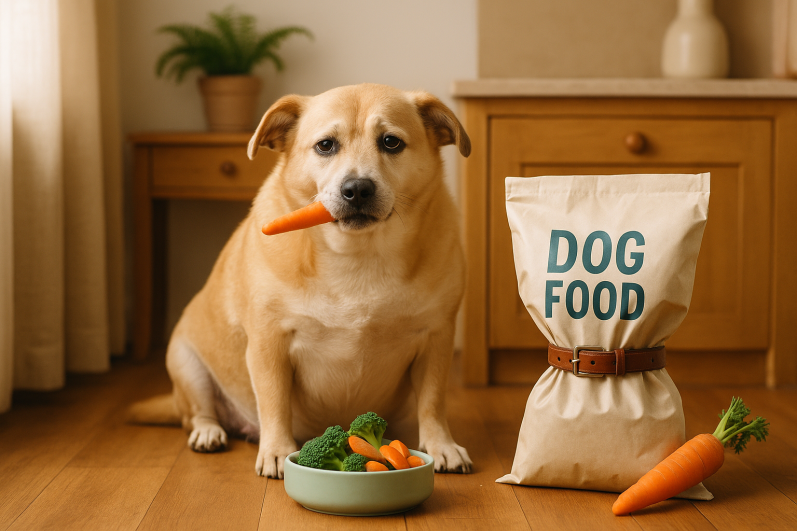
We all want our dogs to feel energetic, comfortable in their bodies, and full of joy.
So when the vet mentions a few extra kilos, it’s natural to think, “Let’s just feed a little less.”
It sounds simple, but this well-meant step can sometimes make things harder for your dog’s body than we realise.
Healthy weight loss isn’t just about reducing food – it’s about protecting health, strength, and balance along the way.
The Bigger Picture: Dog Obesity Around the World

Across the world, more and more dogs are carrying extra weight – often without their owners realising it.
In the United States, a recent nationwide survey found that almost six in ten dogs are now classified as overweight or obese. The pattern is similar elsewhere: international reports estimate that around half of all pet dogs are above their ideal weight.
In Germany and other parts of Europe, studies suggest that between 6 and 31 percent of dogs are overweight, depending on how body condition is measured.
And in Asia, including Thailand, research shows that cultural attitudes toward feeding and “cute chubbiness” often lead to underestimating excess weight – even when it quietly affects health and comfort.
These numbers tell a simple truth: dog obesity is common, but it’s not inevitable.
With awareness, guidance, and balanced nutrition, it’s entirely possible to turn things around – gently and sustainably.
Why “Just Feed Less” Often Backfires
Nutrient Density Must Rise
When you reduce the amount of food, you also reduce nutrients – but your dog’s need for vitamins, minerals, amino acids, and trace elements doesn’t shrink nearly as much.
In other words, when calories go down, food must become more nutrient-rich, not less.
Otherwise, small gaps in nutrition can quietly build up over time, affecting coat quality, energy, and overall health.
That’s why good weight-management foods — and well-planned home diets – are designed to pack more nutrition into every bite.

Losing the Wrong Kind of Weight
When calories are too low, your dog’s body may start breaking down muscle for energy instead of fat.
Muscle keeps your dog strong, mobile, and metabolically active. Without enough of it, they may slow down, feel weaker, and burn fewer calories – making future weight control harder.
The goal isn’t to make your dog smaller – it’s to help them be healthier.
Health Beyond the Scale
A poorly balanced diet can dull the coat, affect digestion, weaken immunity, and leave dogs tired or uncomfortable.
The true goal isn’t just a slimmer silhouette – it’s a vibrant, happy, healthy companion who feels good in their body.
What Works Instead: Balanced, Caring Weight Loss
The effective and compassionate approach isn’t starvation – it’s smarter nutrition.
A properly balanced diet helps your dog lose fat while keeping nutrients, muscle, and joy intact.
A healthy diet plan will:
- Reduce calories without cutting essential nutrients
- Provide high-quality protein to preserve muscle
- Include enough fiber to keep your dog satisfied
- Maintain optimal vitamin and mineral levels even with smaller meals
In many cases, a special weight-loss diet is recommended, as these formulas are specifically designed to meet all of these requirements.
This is what helps your dog lose fat safely – without losing health or happiness.
You’re Not Alone in This
If your dog needs to lose weight, please know that it doesn’t have to be a struggle.
Helping your dog lose weight isn’t about restriction – it’s an act of care.
The right plan keeps them strong, bright-eyed, and comfortable – and you’ll see it in the way they move, play, and rest beside you.
Small changes, steady support, and lots of love truly make the biggest difference.
Every dog’s story is different – and sometimes a few small tweaks make all the difference.
For more guidance, check-out my Lean & Balance Plan or contact me with any questions you may have: Contact.
References:
- Association for Pet Obesity Prevention (2022). New Survey Reveals Alarming Rates of Pet Obesity in the U.S.
- Purina Institute (2023). Global Pet Obesity Overview.
- Meyer et al. (2018). Prevalence of overweight dogs in Europe. Frontiers in Veterinary Science / PMC.
- Pongkan et al. (2018). Body condition, owner perception, and quality of life of companion dogs in Thailand. BMC Veterinary Research.
- Association for Pet Obesity Prevention (2022). Survey: Pet owners often underestimate excess weight.
- Linder DE et al. (2012). Theoretical evaluation of risk for nutritional deficiency with caloric restriction in dogs. J Am Vet Med Assoc.
- Linder DE et al. (2013). Status of selected nutrients in obese dogs undergoing caloric restriction. BMC Vet Res.
- Gaylord L et al. (2018). Risk of nutritional deficiencies for dogs on a weight loss plan. J Anim Physiol Anim Nutr.
- Leung E et al. (2023). Loss of body weight and lean mass in long-stay dogs. J Anim Physiol Anim Nutr.
- Vanelli C et al. (2025). Impact of hypocaloric diets on weight loss and body composition in dogs. Animals (MDPI).
- Yamka RM et al. (2007). Effects of canine weight-loss foods on body composition and metabolism. J Anim Res Vet Med.
- American Animal Hospital Association (2021). Weight Management Guidelines for Dogs and Cats.